
- In the last month, sales of electric vehicles grew by almost a third
- The majority of battery electric vehicles were bought by businesses or to be used in fleets (71.4 per cent)
- Private buyers of fully electric cars has risen in the last year, accounting for more than one in five (22.1 per cent) new cars registered so far in 2025
- The use of EV charger installation grants is on the rise, but despite this uptake property managers and homeowners are still faced with logistical and regulatory barriers
- As a result, installation of private EV charging points is being stalled
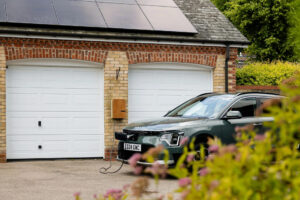 Despite the UK’s drive toward electric mobility, with sales of electric vehicles growing by almost a third in September 2025, on-the-ground experience shows that EV charger installations, both domestic and commercial, are often delayed or abandoned due to avoidable logistical and regulatory barriers.
MD Govier, a leading electrical engineering company, is highlighting the recurring challenges that continue to frustrate homeowners, businesses, and installers, and calling for industry-wide collaboration to resolve this.
1.Issues with property permissions and ownership rights
One of the most frequent barriers lies in the complexity of property boundaries.
In one case, a homeowner’s parking bay was not directly adjacent to their property, meaning the installation would require cabling to cross two neighbours’ land and a section of developer-owned roadway. While technically possible, the project would need written consent from three separate parties, which is a process most homeowners understandably find unworkable.
The solution: Future housing developments could be designed in collaboration with electrical engineers and planning bodies to include pre-approved EV cable routes, helping developers future-proof their sites and reduce retrofit complexity.
2. Legal bottlenecks and red tape slowing commercial rollouts
In commercial environments, legal approvals are proving equally problematic. One recent project, installing pedestal chargers on pavement owned by a management firm, took nearly two years to reach the documentation stage, only for the final contract to arrive with unresolved clauses.
The solution: Developing industry-wide guidance or model agreements through trade associations could help speed up approval processes, while still allowing legal teams to tailor terms for site-specific needs.
3. Power supply problems and homes hitting their limit
Even with permissions secured, a lack of electrical capacity can halt installation plans.
Many older properties already have distribution boards operating at capacity, meaning additional infrastructure, such as upgraded consumer units or new supply lines, must be fitted before an EV charger can be connected. These upgrades can significantly increase EV installation costs, pushing many projects over budget for the homeowner.
The solution: Expanding existing EV grant schemes to include support for necessary electrical upgrades could make EV installations more accessible and equitable, particularly for older housing stock.
4. Certification and compliance
While regulations require EV chargers to be fitted by registered electricians (NICEIC or NAPIT), some consumers remain unaware of the importance of certification. Low-cost installers can undercut professional quotes by skipping compliance steps, leaving customers without the legal documentation they need for insurance or property resale.
The solution: Strengthening public awareness around NICEIC and NAPIT accreditation could help customers identify certified professionals with confidence, protecting both installers and consumers.
Kelly Govier, Finance & Quality Director at MD Govier, comments on the limitations of EV installation: “While national policy is rightly pushing for widespread EV adoption, these examples show where policy ambition could be better supported by practical reform. By working together, installers, developers, and regulators, we can streamline permissions and strengthen the UK’s charging infrastructure.
“To make EV installation practical at scale, we need joined-up thinking: simplified land permissions, clear legal frameworks, and greater awareness of technical requirements in homes and businesses. With a coordinated approach, we can ensure that the systems supporting the net-zero transition enable progress rather than slow it.”
For more information about MD Govier, please visit: https://www.govier-electrical-engineering.co.uk/about/
The post Barriers To Private EV Charger Installations: What’s Slowing The Charge? appeared first on Electrical Times.

